Quick answer
The dmz tour from seoul distance is approximately 50 kilometers (31 miles) to Imjingak Tourist Complex in Paju, the civilian access point for DMZ Peace Tours. Driving time ranges from 60 to 90 minutes depending on traffic and route, with the Tongil-ro expressway offering the most direct path. You must arrive between 09:00 and 14:30 for on-site ticketing, and security screening adds 20-30 minutes before you reach the actual demarcation line.
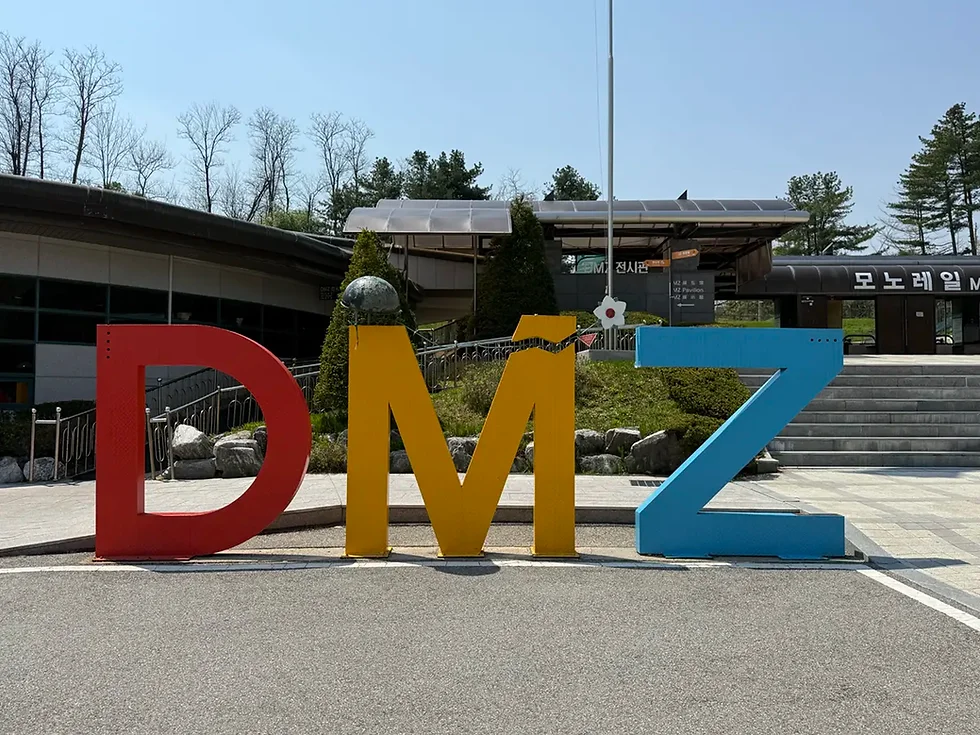
The 50-kilometer distance between Seoul and the DMZ represents one of the world's shortest journeys into a frozen conflict zone. What appears as a straightforward hour-long drive on a map unfolds as a staged approach through increasingly restricted terrain, where civilian roads give way to military corridors and every vehicle entering Paju's northernmost districts passes through checkpoints manned by the Republic of Korea Army. The dmz tour from seoul distance begins at Imjingak Tourist Complex, the southernmost point civilians can reach without military escort. Located in Munsan-eup, Paju-si, Gyeonggi-do, this staging area sits roughly 7 kilometers south of the actual Military Demarcation Line. Tour groups depart from here aboard authorized buses that navigate the Civilian Control Zone, a buffer area where agriculture and limited residential life continue under military oversight. The Imjin River, which flows east to west across the approach, marks the psychological threshold between metropolitan normalcy and the security apparatus that has defined this landscape since the 1953 armistice. Traffic patterns dictate real travel time more than raw distance. Morning departures from central Seoul neighborhoods like Jongno or Gangnam typically require 75 to 90 minutes via the Tongil-ro expressway, while midday travel can compress to 60 minutes when congestion clears. Weekend traffic heading to Paju's outlet malls and restaurants adds unpredictability. The return journey faces Seoul-bound bottlenecks during evening rush periods, particularly between 17:00 and 19:00 when commuter flow intensifies. The final approach to Imjingak reveals why distance matters less than access protocol. Ticketing for the DMZ Peace Tour operates exclusively on-site between 09:00 and 14:30, with no advance reservations and a base entrance fee of 12,200 KRW per person. The facility closes Mondays and processes its last entries well before the posted 14:30 cutoff to accommodate the 90-minute tour circuit. Groups departing after 13:00 risk abbreviated itineraries as daylight and security rotations constrain northern access. The distance from Seoul is fixed, but the window to cross it narrows with every passing hour.
“The 50-kilometer distance between Seoul and the DMZ represents one of the world's shortest journeys into a frozen conflict zone.”
Best Arrival Window for Navigating the DMZ Tour From Seoul Distance
To ensure entry for the DMZ Peace Tour, visitors should arrive at the Imjingak Tourist Complex within the best arrival window of 09:00–14:30. Planning your travel from Seoul to arrive promptly at 09:00 minimizes the risk of reaching capacity limits on high-demand days.
Spring (April–May)
Moderate crowdsMild, 10°C to 20°C. Clear skies provide high visibility for observation points.
Autumn (October–November)
High crowdsCool, 8°C to 18°C. Stable weather conditions are frequent during these months.
Weekday mornings
Low to moderate—. Arriving early on Tuesday through Thursday helps avoid weekend group tour surges.
Verdict: The best time to visit is Tuesday to Thursday, arriving at 09:00, during the months of April or October.
Pre-Visit Checklist for Your DMZ Tour From Seoul Distance
Prepare these essentials before departing Seoul for your DMZ visit.
-
Bring your passport or Korean national ID — Military checkpoints require government-issued photo identification for all visitors.
-
Book your DMZ Peace Tour in advance — Tours sell out quickly and require advance registration through licensed operators.
-
Wear comfortable walking shoes — The tour involves walking on uneven terrain at multiple sites.
-
Pack weather-appropriate layers — Outdoor sections are exposed to wind and temperature changes year-round.
-
Arrive at Imjingak by 09:00 — On-site ticketing closes at 14:30 and processing takes time before departure.
-
Leave drones and large bags behind — Security restrictions prohibit unauthorized recording devices and oversized luggage.
Check availability
Common Questions About the DMZ Tour From Seoul Distance
Everything you need to know about dmz tour from seoul distance